Getting to know cold pressed mustard oil
A closer look at a familiar ingredient in the Indian kitchen.
From mustard seeds to oil
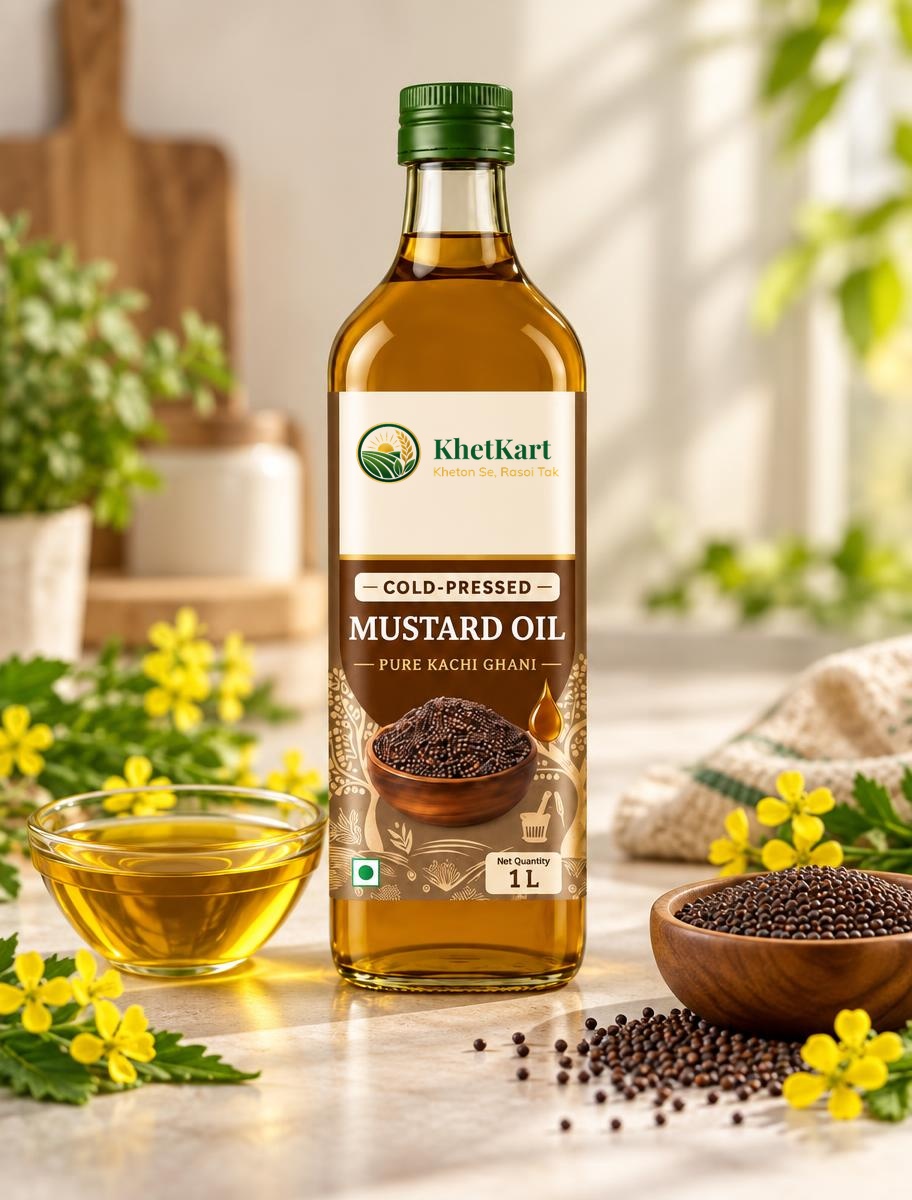
Mustard oil has a recognisable place in many Indian kitchens, bringing a distinctive pungent aroma to familiar recipes. Cold pressing extracts oil mechanically from seeds. KhetKart's catalogue describes its mustard oil using the traditional kachi ghani approach.
A production method alone does not tell you everything about a bottle. Read the actual label for ingredients, permitted use, batch information and storage instructions rather than relying on a name or a colour.
Choose for the way you cook
Start with the cooking habits of your household. How regularly do you use mustard oil, and how much space do you have to store it? KhetKart lists 1 litre, 5 litre and 15 litre packs, allowing you to compare quantities before choosing.
Follow the usage guidance printed on the bottle. Different recipes and regional traditions use ingredients differently; avoid treating general cooking notes as a substitute for product-specific instructions.
Keep the bottle away from heat
Keep oil tightly closed and away from direct sunlight and heat. A cupboard away from the stove is a practical place to start, provided it meets the conditions printed on the pack.
- Close the cap after pouring.
- Keep the opening clean and avoid introducing water.
- Retain batch details and the best-before date.
Make an informed choice
Strong aroma is a characteristic you may notice, but aroma alone cannot establish quality or authenticity. Use the pack information and the company's guidance for questions about a specific product.
For ingredient, allergy or dietary questions, check the label and seek appropriate professional advice when needed. This article is an ingredient introduction, not a health claim.
Explore the collection
Shop KhetKartGeneral kitchen information from the KhetKart Journal. Follow your product's label for ingredients, allergens, storage and best-before guidance.