Making room for whole wheat atta
Simple storage practices for the flour behind your everyday rotis.
An everyday staple, thoughtfully stored
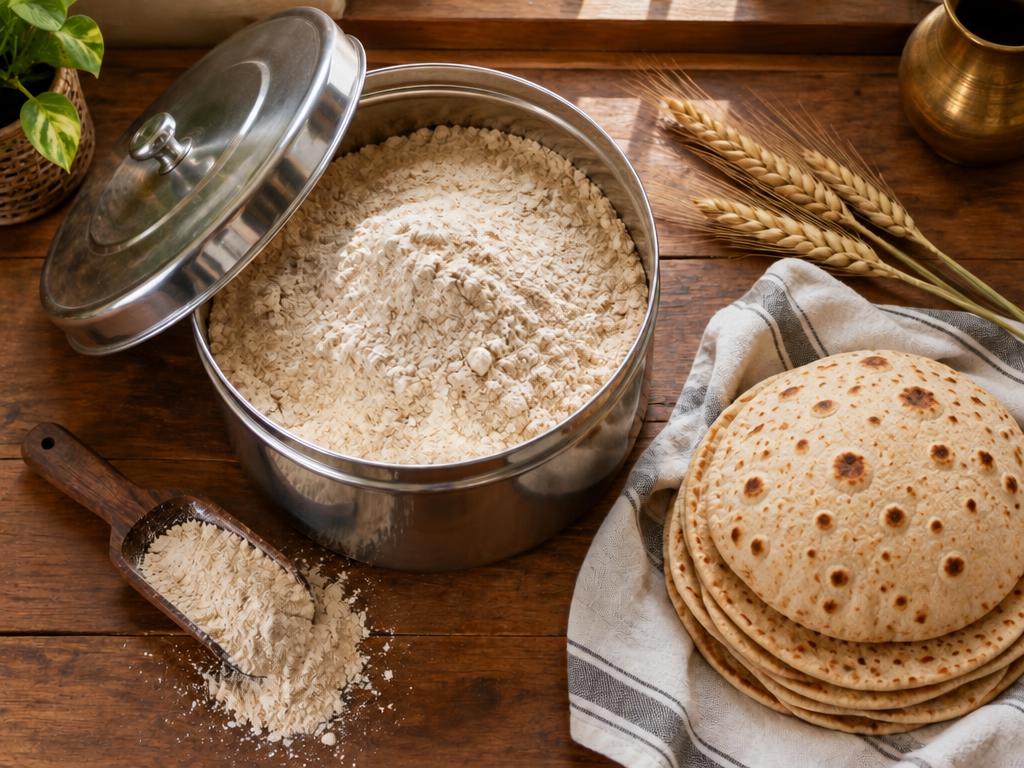
For many households, preparing roti starts with reaching for the atta container. Keeping that container clean, dry and easy to close is a simple way to care for a frequently used ingredient.
Whole wheat flour should be stored according to its pack instructions. A dry storage area away from the sink, sunlight and cooking steam helps you keep the pack in the conditions intended by the manufacturer.
Match the pack to your household
KhetKart's whole wheat atta catalogue includes 5 kg and 10 kg packs. Choose based on how much flour your household uses and the storage space available, rather than picking a larger quantity simply because it is larger.
Before transferring flour, check that your container is clean and fully dry. Keep the original label or record its batch and best-before information so that these details are not lost.
Use a dry scoop every time
Take flour with a clean, dry scoop and close the container after use. Avoid placing wet hands or utensils inside, and keep your dough-making area separate from the stored flour.
- Store flour in a tightly closed container.
- Avoid topping up old flour with a fresh pack.
- Check the pack and flour before preparing dough.
Check before you cook
Inspect flour before use. If it shows signs of pests, contamination, mould or unusual changes, do not use it. The printed label is your reference for storage and best-before guidance.
Wheat contains gluten. Anyone with a wheat allergy or a condition requiring a gluten-free diet should follow professional dietary advice and read product labels carefully.
Explore the collection
Shop KhetKartGeneral kitchen information from the KhetKart Journal. Follow your product's label for ingredients, allergens, storage and best-before guidance.