Simple care for honey at home
Clean utensils, a closed jar and the small details worth remembering.
A familiar jar in the kitchen
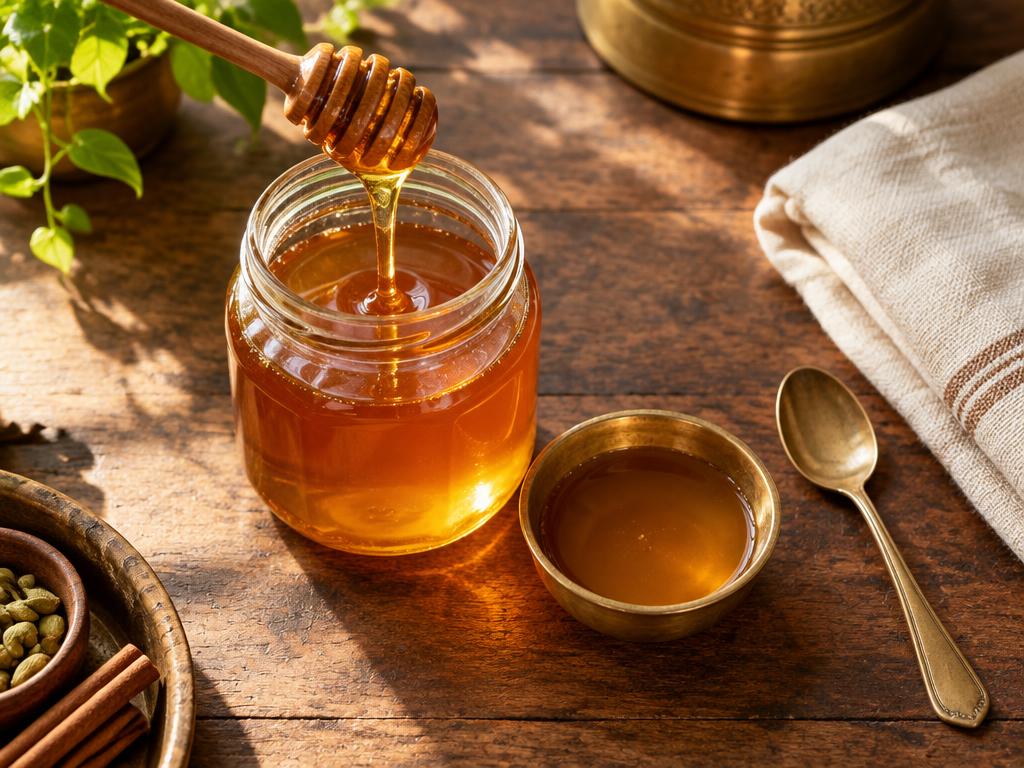
Honey is a familiar ingredient in many kitchens. KhetKart's catalogue lists a 500 g honey pack. Before using it, read the jar's ingredient and storage information, and check that the seal and packaging are intact.
Keep the label after opening so that the batch details and best-before date remain available. Those details are useful if you need to ask the company about a particular jar.
Serve with clean utensils
Use a clean, dry spoon or dipper. Avoid returning a utensil to the jar after it has touched other food, and close the lid when you finish serving.
Follow the storage conditions printed on the pack. Keep the jar in a suitable place away from heat and direct sunlight, rather than beside the stove or on a sunny windowsill.
Understanding changes in texture
Honey may crystallise over time. Crystallisation alone is not a reliable test of purity or quality, and home tests cannot substitute for appropriate product checks.
For any unusual change, contamination or damaged packaging, do not rely on appearance alone. Check the label and contact customer care for guidance about that product.
An important age precaution
Do not give honey to infants under 12 months because of the risk of infant botulism. This precaution applies regardless of how honey is marketed.
Honey is still a source of sugars. If you have a dietary restriction or a medical condition affecting food choices, follow professional advice rather than treating honey as a treatment or a universally suitable substitute.
- Never give honey to a baby under one year.
- Keep the jar closed and utensils dry.
- Use the pack label for product-specific instructions.
Explore the collection
Shop KhetKartGeneral kitchen information from the KhetKart Journal. Follow your product's label for ingredients, allergens, storage and best-before guidance.